Top 10 Tips to Effectively Localize Mobile Applications for Global Markets?

In today's globalized world, companies aim to reach users across diverse markets. One crucial strategy is to localize mobile applications effectively. Localization enhances user experience by adapting apps to meet cultural and linguistic needs. This process goes beyond mere translation. It involves understanding local customs, preferences, and legal requirements.

Effective localization can significantly impact user engagement and retention. A well-localized app resonates with users, increasing satisfaction and loyalty. However, localization is not a one-size-fits-all solution. It demands attention to detail and ongoing adjustments.

Failure to localize mobile applications can lead to misunderstandings or cultural missteps. Companies must evaluate their strategies constantly. They need to reflect on their approach and adapt to shifting market dynamics. With the right techniques, businesses can navigate these challenges and thrive in global markets.

Top 10 Tips to Effectively Localize Mobile Applications for Global Markets?

Understanding the Importance of Localization in Mobile Apps
Top 10 Tips to Effectively Localize Mobile Applications for Global Markets?

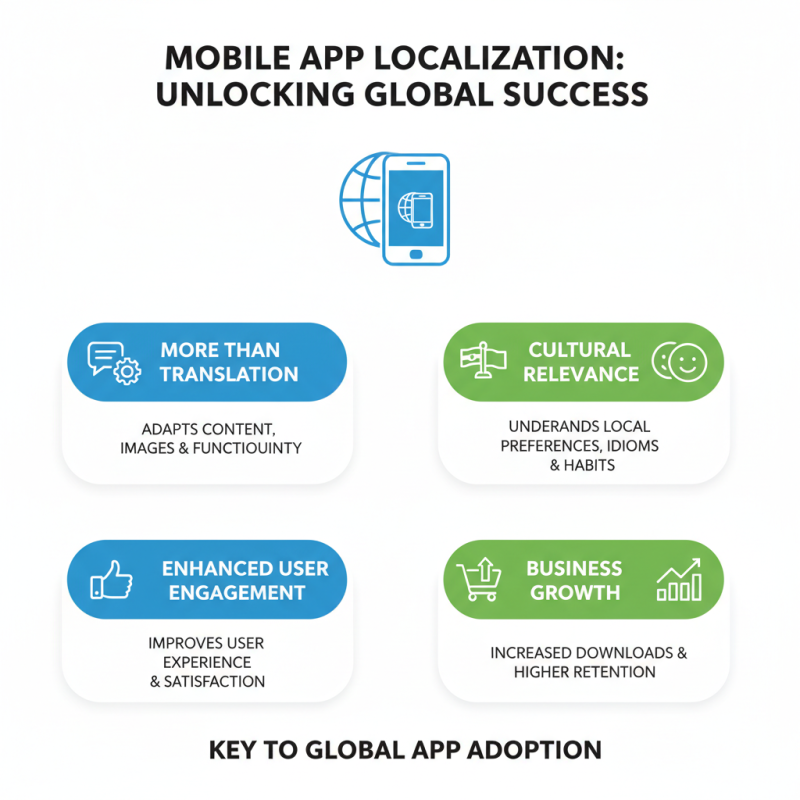
Localization is more than just translation. It's a vital process that ensures your mobile application resonates with users across different cultures and regions. By understanding local preferences, idioms, and habits, you can significantly enhance user engagement. A well-localized app can lead to increased downloads and higher retention rates.

One crucial tip is to adapt your visuals. Colors, symbols, and images carry different meanings in various cultures. Ensure that your design is culturally appropriate. Another important aspect is to tailor your content. Features like currency, date formats, and language nuances should be relevant to the target audience. Ignoring these details can alienate potential users.

Testing your localized app with native speakers is essential. They can provide valuable insights into usability and relatability. Sometimes, what seems perfect to one group may not resonate with another. Regularly gather feedback to improve localization continually. This iterative process helps in making your app more user-friendly across diverse markets. Beside this, it's key to stay informed about evolving cultural trends. They can inform necessary updates to your app's localization strategy.
Identifying Target Markets and Cultural Differences

When localizing mobile applications, understanding target markets is crucial. Each region has its own unique cultural nuances. Language is a key factor, but it's only the beginning. For example, colors, symbols, and even gestures hold different meanings across cultures. A color that signifies positivity in one market could represent something negative in another. This underscores the need for thorough research.

Cultural differences also affect user behavior. In some regions, users prefer intuitive navigation, while others appreciate detailed instructions. Conducting user testing with a sample from the target demographic can reveal these preferences. Ignoring these insights often leads to frustrating user experiences.

Localization is not just about translation; it’s about resonance. Ensure your app speaks to the audience’s cultural identity. Adapting marketing strategies is equally important. Engaging local influencers can help bridge gaps. Authenticity builds trust, so strive to reflect local norms. Yet, be prepared for challenges. Feedback may highlight areas that need more adjustment. The goal is to create an app that feels familiar and relevant to each market.

Top 10 Tips to Effectively Localize Mobile Applications for Global Markets

Tip Number Localization Aspect Description Key Considerations
1 Language Translation Ensure accurate and culturally relevant translation of app content. Consider regional dialects and idioms.
2 Cultural Adaptation Adapt the app's features to align with local customs and culture. Research local practices and preferences.
3 User Interface Design Design UI that resonates with local users while maintaining usability. Tailor colors, symbols, and layouts accordingly.
4 Regulatory Compliance Ensure the app complies with local laws and regulations. Stay updated on local legal requirements.
5 Payment Methods Integrate popular local payment options. Research widely used payment services in the region.
6 Customer Support Provide customer support in the local language. Employ local staff or translators.
7 Marketing Strategies Customize marketing strategies to fit local tastes. Use local influencers and platforms.
8 Cultural Symbols Incorporate symbols that are culturally significant. Avoid symbols that may have negative connotations.
9 Feedback Mechanism Implement ways to gather user feedback effectively. Use local channels to reach users.
10 Testing and QA Conduct thorough testing with local users. Ensure feedback is integrated into iterations.

Adapting User Interface and Experience for Local Audiences

When localizing mobile applications, the user interface (UI) and user experience (UX) play crucial roles. Every culture has distinct aesthetics and preferences. Color schemes that evoke trust in one culture might seem off-putting in another. For instance, bright colors could be attractive to younger users, while subdued tones may appeal to a more mature audience. Conducting cultural research helps in making informed design choices.

Icons and imagery are another area where localization demands attention. An icon representing a friendly gesture in one country could be misinterpreted elsewhere. It’s essential to select visuals that resonate positively across different cultures. Sometimes, what works in one market may not translate well. Regular user testing in localized settings can uncover these nuances.

Furthermore, language localization is more than just translation. It involves adapting phrases to maintain their meanings while sounding natural to local users. Slang, idioms, and even humor may need tweaking. Regular feedback from local users can identify areas needing improvement. By iterating on design and language based on user input, applications can evolve to meet diverse needs effectively.

Top 10 Tips to Effectively Localize Mobile Applications for Global Markets

Translating Content Accurately and Culturally Appropriately

Translating content for mobile applications requires more than just a literal conversion of words. It’s about capturing the essence and intent behind the language. Each region has unique cultural nuances. For instance, while humor might thrive in one culture, it could fall flat in another. This is where the art of localization comes into play, often necessitating a rethinking of the initial message.

Moreover, using correct terminology is crucial. Technical jargon that makes sense in one context may confuse users in another. Understanding local slang or dialects can make your app feel more relatable. A simple word choice can enhance user engagement significantly. However, it’s easy to misstep. A misinterpreted phrase may unintentionally offend or alienate users. Testing translations with native speakers can help mitigate these risks.

Localization also extends into visual elements. Color meanings vary across cultures. A color deemed fortunate in one region could have negative connotations elsewhere. Careful consideration of these factors can elevate a user’s experience. Ignoring cultural contexts can lead to missed opportunities for deeper connections. Paying attention to subtleties creates a more immersive app environment.

Testing and Gathering Feedback for Continuous Improvement

Top 10 Tips to Effectively Localize Mobile Applications for Global Markets?

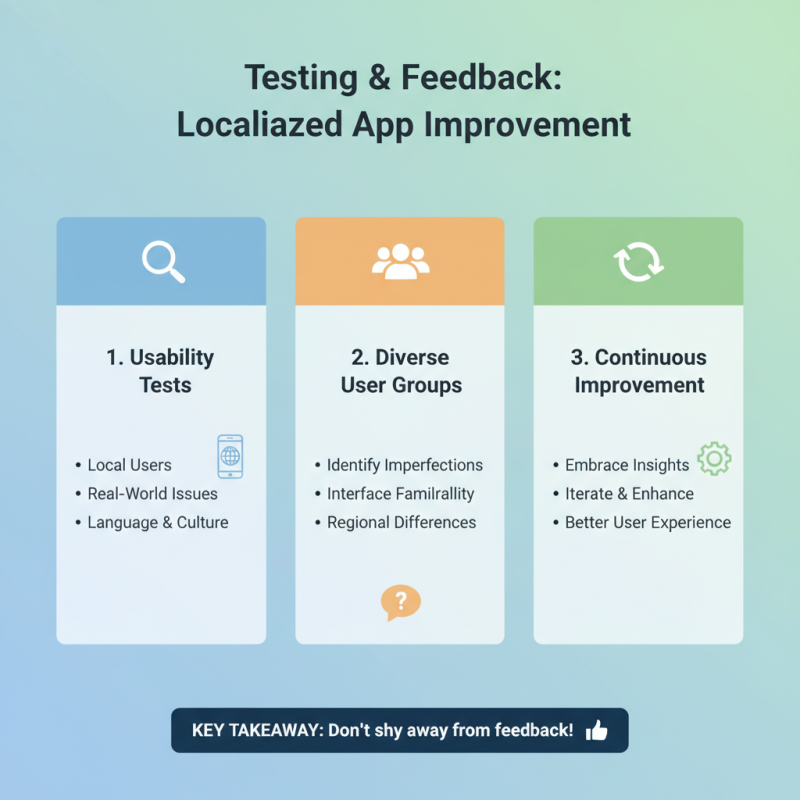
Testing your localized mobile application is crucial. Conducting usability tests with local users reveals real-world issues. Focus on language nuances, cultural references, and interface familiarity, which might differ significantly across regions. Feedback from diverse user groups can identify imperfections. Don’t shy away from these insights; they are fundamental to improvement.

Gathering user feedback should be an ongoing process. Use surveys and app analytics to understand user behavior. Encourage local testers to share their thoughts. Sometimes, feedback can be surprising. What you consider intuitive may not resonate with local users. Adjustments based on this feedback improve user experience.

Regularly update your app based on feedback. This creates a cycle of continuous improvement. Engage with users through social media and forums. Their insights can be invaluable. Remember, a successful localized app is not just about translation. It's about connection and relevance in each market.