Top 10 Types From China Bulk Oil Storage Tank Manufacturers

Choosing the right tank requires more than comparing price, capacity, and delivery dates. For every China Bulk Oil Storage Tanks Manufacturer, design quality should remain the central question. A tank may look impressive in a catalog, yet its welds, coating system, roof structure, and inspection records reveal its real value. This guide examines ten common types used for bulk oil storage, including fixed-roof, floating-roof, horizontal, vertical, double-wall, and API-oriented designs.

Dr. James G. Speight, a recognized petroleum specialist, states, “Storage is an integral part of the petroleum supply chain.” That observation remains practical. A 5,000-cubic-meter tank needs more than steel plates and a painted exterior. It needs stable foundations, controlled venting, reliable level measurement, accessible manways, and corrosion protection suited to the stored product. Small details matter. Even a misplaced nozzle can complicate maintenance.

Experienced buyers should review plate certificates, welding procedures, pressure or leak-test records, coating specifications, and factory quality controls. They should also confirm the supplier’s experience with similar climates and operating conditions. A manufacturer familiar with coastal humidity may choose different protection from one serving a dry inland facility. That difference is easy to overlook.

The “best” tank is not always the largest or cheapest. This is where many projects become uncertain. Site layout, oil characteristics, temperature changes, fire-safety planning, and future expansion can alter the decision. The following ten types provide a practical comparison, although no single design fits every facility. Careful engineering still matters more than a polished brochure.
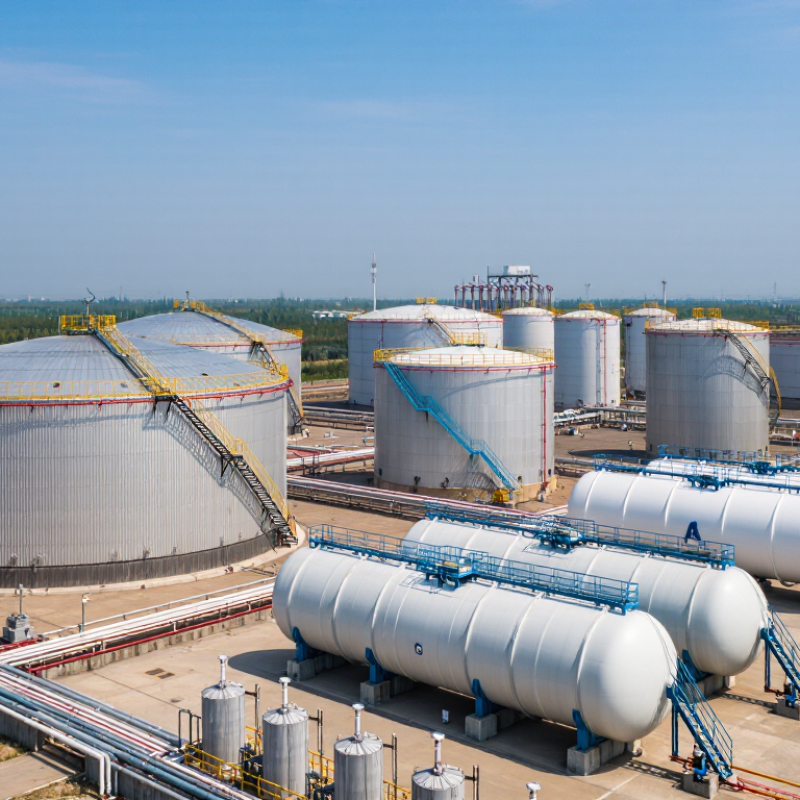
Top 10 Types From China Bulk Oil Storage Tank Manufacturers

China’s Top 10 Bulk Oil Storage Tank Types by Capacity, Design, and Use

Chinese bulk oil storage tank manufacturers commonly produce ten practical types, selected by capacity, design, and application.

Small aboveground tanks suit farms, workshops, and service yards. Medium vertical fixed-roof tanks support regular commercial storage. Large cone-roof tanks handle higher volumes with stable foundations.

Horizontal cylindrical tanks work well where height is restricted. Space matters.

Floating-roof tanks reduce vapor exposure in large installations. Double-wall tanks add an internal safety barrier and simplify leak monitoring. Insulated tanks help control temperature-sensitive oils during seasonal changes.

Underground tanks preserve surface space but require careful corrosion protection and groundwater assessment. Mobile tanks serve temporary projects and remote maintenance work. Fabricated modular tanks allow phased capacity expansion.

A reliable specification should match tank volume with daily turnover, not only maximum demand. Engineers normally review steel grade, weld quality, vent sizing, grounding, access platforms, and secondary containment.

Inspection records should include coating thickness and pressure-test results. In practice, capacity labels can mislead when usable volume excludes expansion space and sediment allowance. That detail is easy to miss.

Local climate also changes the design: coastal air accelerates corrosion, while cold regions may need stronger insulation. Chinese manufacturers with experienced engineering teams can adapt dimensions, fittings, and inspection plans, but buyers should verify drawings and test documents independently.

Fixed-Roof Tanks: 100–100,000 m³ Storage for Low-Volatility Oils

Fixed-roof tanks provide practical storage for low-volatility oils, with capacities from 100 to 100,000 m³. Their enclosed design limits contamination from rain, dust, and changing weather. A cone roof is common, but roof selection should match tank diameter, local wind, and maintenance access. Large tanks need carefully designed foundations because uneven settlement can distort shell plates and pipelines.

Oil density, operating temperature, and vapor behavior guide the engineering process. Even low-volatility products can release vapors during filling, heating, or cleaning. Proper vents, pressure-vacuum protection, and grounding help control these conditions. Carbon steel is widely used, while internal coatings may protect surfaces from water, sediment, or chemical attack. Small details matter. A poorly placed drain can create long-term maintenance problems.

Field inspections should check weld quality, shell thickness, roof supports, leakage signs, and foundation movement. Automated level gauges improve inventory control, but they still require calibration and independent checks. A simple capacity estimate can mislead when thermal expansion and usable volume are ignored. Fixed roofs are efficient, yet they are not maintenance-free. Design teams should review product data, climate conditions, fire protection, and local engineering requirements before fabrication. Mistakes often begin with assumptions made too early.

Top 10 Types From China Bulk Oil Storage Tank Manufacturers - Fixed-Roof Tanks: 100–100,000 m³ Storage for Low-Volatility Oils

Representative nominal capacity levels for fixed-roof storage tanks used with low-volatility petroleum products.

Fixed-roof tanks are commonly selected across a wide capacity range, from approximately 100 m³ service tanks to 100,000 m³ large-scale storage units. Typical applications include crude oil, diesel, fuel oil, and other relatively low-volatility liquids. The figures represent capacity benchmarks and do not refer to any specific company or brand.

Floating-Roof Tanks: 10,000–150,000 m³ with Lower Evaporation Loss

Floating-roof tanks are widely selected for storing crude oil, refined products, and other approved liquids in large volumes. China bulk oil storage tank manufacturers commonly supply capacities from 10,000 to 150,000 m³, supporting terminals, refineries, and strategic storage sites.

The roof moves with the liquid level. This design reduces vapor space and can lower evaporation loss compared with fixed-roof tanks. However, performance depends on seal quality, roof drainage, wind conditions, and product temperature. A poorly adjusted seal can still allow visible vapor release. That detail is easy to underestimate.

Large tanks require careful foundation control. Uneven settlement may affect roof movement and shell stress. Experienced engineers usually review soil data, seismic conditions, wind loads, and inspection access before fabrication. Materials, welding procedures, and coating systems should match the stored medium and local safety requirements. These choices influence service life more than capacity alone.

Tips

Check the seal condition during scheduled inspections. Keep roof drains clear after heavy rain. Measure settlement points regularly. Ask manufacturers for welding records, dimensional reports, and hydrostatic test documentation. Do not assume a larger tank always means lower operating cost. Energy use, maintenance access, vapor recovery, and site conditions may change the result. A design review by qualified professionals remains necessary.

Horizontal, Vertical, and Underground Tanks: Structural Differences

Top 10 Types From China Bulk Oil Storage Tank Manufacturers

Horizontal, vertical, and underground tanks differ in more than appearance. Their geometry controls capacity, foundation design, inspection access, and operating behavior.

Horizontal tanks usually use saddles or ring supports. Their lower height suits smaller sites and easier maintenance. However, support loads must be distributed carefully to prevent shell distortion.

Vertical tanks provide efficient storage on limited ground area. A flat-bottom shell transfers weight through an engineered foundation, often with a fixed or floating roof. Height increases wind and seismic demands, so anchoring and shell thickness require detailed calculation.

In my experience, drainage around the foundation is often underestimated. That small oversight can accelerate corrosion.

Underground tanks reduce visual impact and protect stored material from temperature changes. They need reinforced walls, waterproofing, leak monitoring, and reliable access points. Excavation conditions can change the design completely. A high water table may create buoyancy risks, even when the empty tank appears stable.

China bulk oil storage tank manufacturers typically compare steel grade, welding quality, coating systems, and inspection records during production. Yet no single structure fits every site. Fluid properties, turnover rate, land conditions, and local engineering requirements must guide the choice.

The cheapest layout may become expensive after installation.

Testing should be planned, not added later.

Carbon Steel, Stainless Steel, and API 650 Compliance in Tank Selection

China’s bulk oil tank manufacturers commonly offer ten configurations: fixed-roof, external floating-roof, internal floating-roof, cone-roof, dome-roof, open-top, insulated, heated, stainless steel, and carbon steel tanks. Selection should follow the stored oil, vapor control needs, temperature range, and site conditions. The International Energy Agency’s Oil 2024 report expects global oil demand to approach 105.6 million barrels per day by 2029. Storage efficiency will matter more.

Carbon steel remains practical for large-volume storage because it offers strength, weldability, and lower material cost. However, moisture, sulfur compounds, and poor coating maintenance can accelerate corrosion. Stainless steel provides stronger corrosion resistance and easier cleaning, but its higher cost can be difficult to justify for ordinary fuel grades. A mistake here becomes expensive.

API 650 is central to aboveground welded tank selection. It addresses design, fabrication, welding, inspection, and testing requirements. Buyers should verify shell thickness, roof design, foundation loading, settlement control, and hydrostatic testing records. Floating roofs can reduce vapor losses, while insulation and heating systems support viscous oils. The U.S. Energy Information Administration reports that petroleum liquids remain widely stored in aboveground tanks, but operating risks increase when inspection intervals are ignored. Certification alone is not enough. Supplier welding procedures, material certificates, dimensional reports, and site commissioning evidence deserve equal attention.

Conclusion

Choosing the right bulk oil storage tank requires evaluating capacity, structure, material, and operating conditions. China’s top tank types range from fixed-roof models with capacities of approximately 100 to 100,000 m³, commonly used for low-volatility oils, to floating-roof tanks that can reach 150,000 m³ and help reduce evaporation losses. Horizontal, vertical, and underground tanks each offer different advantages in installation, space utilization, maintenance, and site planning. A qualified China Bulk Oil Storage Tanks Manufacturer can help match tank design to storage volume, oil characteristics, and facility requirements.

Material selection is equally important. Carbon steel is widely used for general storage, while stainless steel may be selected when stronger corrosion resistance or improved cleanliness is needed. API 650 compliance supports reliable design and fabrication practices for many large aboveground tanks. Effective storage planning should also include fire protection, leak detection and containment, emergency access, grounding, ventilation, and safe operating procedures. NFPA 30-based considerations can further guide the control of ignition sources, separation distances, and fire prevention measures, helping create a safer and more dependable oil storage system.