What is Swarm Drones and How Do They Work?
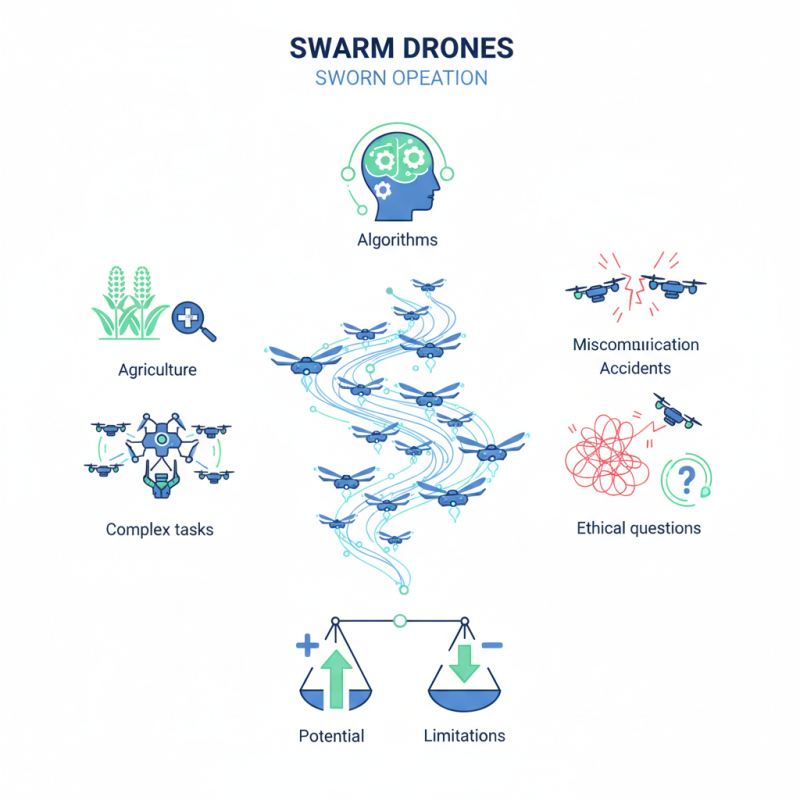
Swarm Drones represent a revolutionary leap in drone technology. These drones operate as a cohesive unit, mimicking the behavior of swarms in nature. By communicating with each other, they share information in real-time. This allows them to perform complex tasks effectively.
The technology behind Swarm Drones is both intriguing and challenging. They are programmed to follow certain algorithms. However, unpredictable environmental factors can disrupt their operations. Swarm Drones can complete missions that a single drone cannot, but coordination is key. Miscommunication can lead to failures or accidents.
These drones are being used in various fields, from agriculture to search and rescue. Their precision and efficiency are impressive. However, ethical questions arise about their usage. As we explore Swarm Drones, it's essential to reflect on both their potential and their limitations.
What are Swarm Drones? An Overview of Their Characteristics
Swarm drones represent a fascinating advancement in aerial technology. These are groups of drones that work together seamlessly. They communicate and coordinate their actions to achieve complex missions. This collective behavior mimics nature, particularly swarming patterns seen in birds and insects. By operating as a cohesive unit, swarm drones can cover larger areas more efficiently.
The characteristics of swarm drones are intriguing. They are equipped with sensors and software that enable real-time data sharing. Drones in a swarm can make decisions collectively, adapting to changing environments and obstacles. Their agility allows them to perform tasks such as search and rescue, agriculture monitoring, or environmental studies. However, challenges arise. Issues like communication breakdowns within the swarm can lead to failure. There is also the concern of them colliding or losing formation. These flaws highlight the need for better algorithms and improved communication systems.
Swarm drones boast the potential for revolutionizing various industries. Yet, the technology is still in its early stages. Researchers continue to explore optimal control strategies and operational limits. As exciting as swarm technology is, it requires careful consideration and refinement. Finding the right balance between performance and safety remains a crucial task.
What is Swarm Drones and How Do They Work? - What are Swarm Drones? An Overview of Their Characteristics
| Characteristic | Description | Applications | Advantages |
| Autonomy | Operate with minimal human intervention, relying on algorithms. | Military operations, search and rescue missions. | Increased efficiency and reduced risk to human pilots. |
| Cooperation | Work together to complete tasks, sharing information. | Environmental monitoring, agricultural applications. | Ability to cover vast areas quickly and effectively. |
| Communication | Utilize advanced communication systems to coordinate actions. | Disaster response, surveillance activities. | Real-time data sharing enhances situational awareness. |
| Scalability | Can easily scale operations by adding more drones to the swarm. | Crowd monitoring, large-scale logistics. | Adaptable to various missions and environments. |
| Cost-effectiveness | Lower costs compared to traditional monitored systems. | Surveillance, remote sensing tasks. | Reduced operational costs and manpower requirements. |
The Technology Behind Swarm Drones: Algorithms and Communication
Swarm drones represent a fascinating advancement in technology. They operate based on algorithms that allow for coordination and communication between units. Each drone in a swarm can share information with others. This communication creates a network, enabling efficient operation. When a drone detects an obstacle, it relays the data almost instantly. This rapid exchange helps in avoiding collisions and optimizing flight paths.
The algorithms behind swarm drones mimic natural behaviors seen in nature, such as birds flocking or fish schooling. These patterns enable drones to make collective decisions. Individual drones may have limited abilities, but together they perform complex tasks. This requires adjustment and adaptation, which is not always perfect.
There are times when drones misinterpret signals or fail to communicate effectively.
Implementing swarm technology raises questions about reliability and performance. Can drones trust each other completely? What happens when communication fails? These challenges underline the ongoing need for improvement in technology.
Exploring these details is critical for the future of swarm drones. Continuous reflection on their performance and reliability will drive innovation in this exciting field.
Applications of Swarm Drones in Military and Civilian Sectors
Swarm drones are becoming vital tools in both military and civilian sectors. In military applications, they can perform tasks such as surveillance and reconnaissance. Multiple drones can coordinate to gather real-time intelligence. This enhances situational awareness. However, challenges exist, such as communication errors. A miscommunication could lead to unintended consequences on the battlefield.
In civilian sectors, swarm drones have unique uses. They can assist in agricultural monitoring by surveying large areas quickly. Farmers can obtain detailed crop health data using swarms efficiently. They can also be deployed for search and rescue missions. Despite their potential, there are limitations. Privacy concerns arise when drones operate in populated areas. Additionally, managing large groups of drones still needs improvements. The technology is promising but requires further development to address these challenges effectively.
Applications of Swarm Drones in Military and Civilian Sectors
Challenges in Swarm Drone Coordination and Deployment
Swarm drones are becoming increasingly popular for their ability to work in unison. However, coordinating them poses significant challenges. One major issue is communication. Drones must share information in real-time to execute tasks effectively. If one drone loses connection, it can disrupt the entire operation. This vulnerability can lead to delays or errors in mission execution.
Another challenge lies in navigation. When multiple drones are flying together, they must avoid collisions. The more drones in a swarm, the more complex the navigation becomes. With tighter spaces, real-time adjustments are critical. Simple mistakes can have serious consequences. Operators need to anticipate these issues during deployment.
Tips for improving coordination include investing in better communication technology. Using AI can enhance navigation and reduce collision risks. Regular training for operators can also improve response times during unexpected situations. It's crucial to adapt to changing environments. Continuous feedback helps refine processes over time. The key is to balance efficiency with safety.
Future Trends and Innovations in Swarm Drone Technology
Swarm drone technology is advancing rapidly. These drones work together, mimicking the behavior of swarms in nature. This collective action leads to better efficiency and coverage in various tasks, like agriculture, search and rescue, and environmental monitoring.
Future trends indicate that swarm drones will become more autonomous. They will rely on artificial intelligence to make real-time decisions. However, challenges remain. Ensuring communication between drones in crowded spaces is complex. They may also face obstacles with regulatory frameworks as they become more widespread in civilian applications.
Innovations are also expected in energy efficiency. Researchers are exploring new battery technologies and materials. These advancements could prolong flight times and reduce downtime. Nevertheless, there are concerns about privacy and security issues that need addressing. A balance between innovation and ethical considerations is essential for the progressive use of swarm drones.
.svg)


.svg)

.svg)


 052925 - AI Translation 101 (1).png)


.svg)

.svg)


.jpg)