10 Best Features of Smartling Translation Services for Businesses
In today's global market, businesses seek efficient translation solutions. Smartling translation services stand out for their innovative features. According to John Linn, an industry expert, "Effective translation is the bridge to reaching international customers." This highlights the significance of advanced translation technologies.
Smartling translation uses cloud-based platforms to streamline communication. Their platform integrates seamlessly with various content management systems. This ensures quick updates and accurate translations. Companies benefit from time savings and reduced operational costs. However, many organizations struggle with initial integration. The learning curve can be challenging for teams unfamiliar with new tools.
Moreover, the emphasis on quality assurance is critical. Smartling translation employs native speakers for proofreading. This guarantees that translations maintain cultural relevance and precision. Yet, some businesses find it hard to trust automated processes alone. Balancing technology with human oversight is essential for optimal results. Exploring these features reveals how Smartling can enhance global outreach.

Key Benefits of Using Smartling Translation Services for Businesses
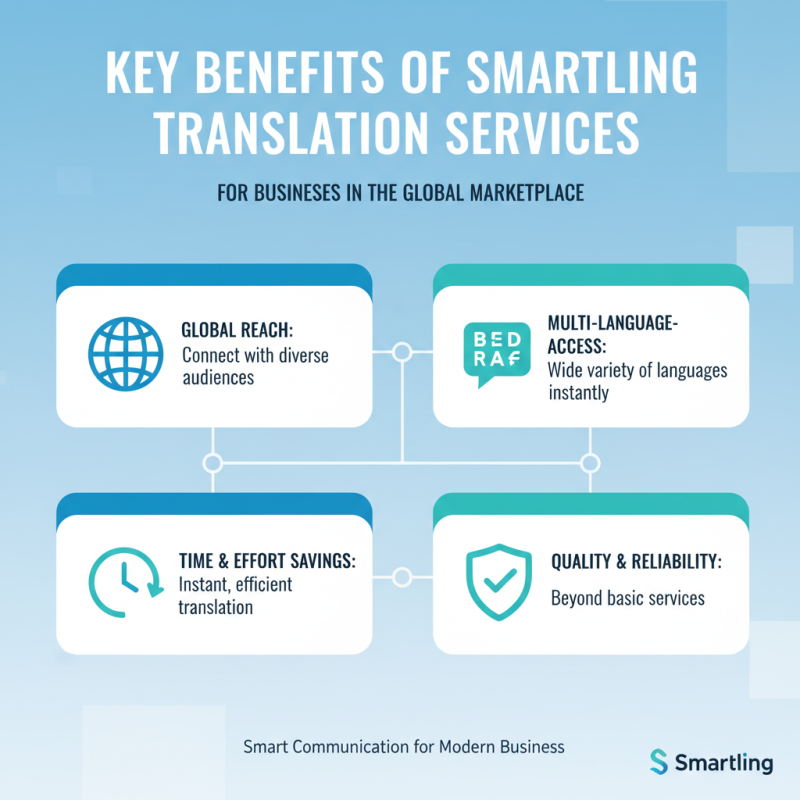
In today's global marketplace, effective communication is essential. Smart translation services help businesses reach wider audiences. They offer instant access to a variety of languages. This convenience saves time and effort. However, not all translation services are created equal.
One key benefit is cultural sensitivity. A good translation service understands local nuances. This can significantly impact how a message is received. It's not just about words; it’s about context. Additionally, they employ professionals who know industry jargon. This adds a layer of accuracy that automated tools lack.
Business owners might overlook the importance of regular updates. Languages evolve, and so do market needs. Outdated translations can mislead customers. Investing in a quality service maintains the integrity of your brand. Although the initial cost may seem high, the long-term benefits can outweigh them. It's a strategic step toward fostering better relationships with diverse clients.
Comprehensive Language Support and Localization Options
In today's global marketplace, comprehensive language support is vital for businesses aiming to connect with diverse audiences. Effective translation services facilitate clear communication across various languages. This ensures that companies resonate with local cultures and meet their clients' specific needs. Language barriers can lead to misunderstandings and lost opportunities, so overcoming them is crucial.
Localization options play an essential role in adapting content for different regions. It's not just about translating words but also about addressing cultural differences. Businesses need to consider idioms, preferences, and societal norms. A well-localized approach can enhance user experience and foster brand loyalty. However, there can be challenges. Ensuring consistent quality across languages while capturing the essence of the brand can require continual refinement.
Developing a deep understanding of target markets is essential. Businesses may face obstacles in recognizing local trends and consumer behavior. It’s important to engage experts who can assess these nuances. The result should be a tailored approach that resonates universally yet feels personal. While achieving this can be complex, investing in quality translation and localization is a crucial step towards successful global outreach.
10 Best Features of Smartling Translation Services for Businesses - Comprehensive Language Support and Localization Options
| Feature | Description | Benefits |
|---|---|---|
| Comprehensive Language Support | Support for over 150 languages and dialects. | Reach global audiences and enhance communication. |
| In-context Editing | Allows translators to see how translations fit in the actual context. | Improves accuracy and maintains brand voice. |
| API Integration | Seamless integration with existing workflows and tools. | Streamlines the localization process and saves time. |
| Translation Memory | Utilizes previously translated content to enhance consistency. | Reduces cost and time for future translations. |
| Glossary Management | Centralized glossary for terminology management. | Ensures terminology consistency across all materials. |
| Quality Assurance Tools | Automated quality checks to maintain high translation standards. | Minimizes errors and enhances the final product. |
| User-friendly Interface | Intuitive design that simplifies the user experience. | Reduces training time and improves user satisfaction. |
| Flexible Pricing Models | Various pricing options to fit different business needs. | Allows businesses to choose a cost-effective solution. |
| Collaboration Tools | Facilitates teamwork among translators, editors, and clients. | Enhances project visibility and communication. |
| Multimedia Translation Support | Capabilities to translate various media formats. | Ensures all content types are effectively localized. |
Advanced Translation Memory and Machine Learning Integration
In today's global market, effective communication is vital for business success. Advanced translation memory (TM) technologies play a key role in this process. Translation Memory stores previously translated phrases, ensuring consistency and speeding up the translation process. Businesses can reduce costs significantly, up to 35%, by using TM effectively. It eliminates the need for repeated translations and enhances overall translation quality.
Machine learning integration further enhances these services. AI-driven algorithms learn from previous translations, improving accuracy over time. According to the Common Sense Advisory, 74% of organizations believe that effective localization positively impacts their revenue. Implementing machine learning helps businesses achieve this by streamlining operations.
Tips for maximizing translation efficiency: Regularly update your TM to include fresh content. Engage linguists who understand your brand. Use pre-translation checks to identify potential issues early. Small adjustments can lead to major improvements in communication effectiveness. Focus on creating a continuous feedback loop for ongoing enhancements.
Real-time Collaboration Tools for Efficient Workflow Management
In the fast-paced world of global business, efficient collaboration is crucial. Real-time collaboration tools have become essential for managing workflows in translation services. These tools allow team members to communicate instantly, enhancing productivity. According to a recent industry report, companies utilizing real-time collaboration see a 25% increase in project completion rates.
Translation projects often involve multiple stakeholders. Without effective communication, misunderstandings can arise, leading to costly delays. Feedback loops can be slow and inefficient. However, with real-time collaboration, feedback can be immediately addressed. This not only streamlines the translation process but also improves the overall quality of the final product.
Despite these advantages, some companies struggle to implement these tools effectively. Teams may face challenges when integrating new technologies into their existing workflows. Resistance to change can hinder progress. Continuous training and support are vital for overcoming these obstacles. Organizations must address these issues to fully leverage the benefits of real-time collaboration in translation services.
10 Best Features of Smartling Translation Services for Businesses
Robust Reporting and Analytics for Performance Tracking
In today’s global market, robust reporting and analytics are essential for tracking translation performance. Businesses need to understand how their multilingual content is received. This understanding leads to better decision-making and more effective localization strategies.
Effective analytics can identify trends. Businesses can see which languages resonate most with their audiences. This insight allows them to allocate resources more effectively. Remember, relying solely on high-level metrics may not tell the whole story. It's crucial to delve deeper and analyze the data thoroughly.
Tips for effective performance tracking include setting clear KPIs. This helps to measure translation success. Regularly reviewing analytics can highlight areas needing improvement. Don't overlook the importance of feedback from language experts. Their insights can help refine the translation process and enhance the overall quality of content. Embrace continuous improvement to adapt to changing market needs.
Related Posts
-
Top 10 AI for Translation Tools Transforming Communication Today?
-

Why You Need Translation Management Software for Your Business Growth?
-

2026 How to Choose the Best Localization Software for Your Business?
-

How to Become a Professional Language Translator in 2026?
-

China Top Translation API Solutions for Effortless Multilingual Communication?
-

How to Choose the Best Translation Management Software for Your Needs?