How to Achieve Effective App Localization for Global Markets?
Achieving effective app localization is essential for success in global markets. Expert Anna Zhang, a well-known voice in the app localization field, emphasizes, “Localization is not just about translation; it’s about understanding your audience.” This highlights the deeper need for cultural sensitivity and market awareness.
In today’s competitive landscape, localization can make or break an application’s reach. Users prefer apps that feel familiar and relevant. When companies overlook cultural nuances, they risk alienating potential users. For instance, a successful app in one region may fail if it doesn’t adapt to local languages, customs, or preferences.
Moreover, app localization is not a one-time effort. It requires ongoing adaptation and learning. Companies may invest heavily but still face challenges in certain markets. This process can be complex, and mistakes are common. Reflecting on this, it’s clear that effective app localization demands dedication, insight, and constant evaluation.

Understanding the Importance of App Localization for Global Success
App localization is crucial for success in today’s global market. It goes beyond simple translation. Effective localization adapts an app’s content and interface to meet the cultural and contextual needs of users. This is essential for building trust and enhancing user experience. Without it, an app might fail to resonate with its audience.
Here are some tips to improve your app localization efforts. First, conduct thorough market research. Understand local users’ preferences and cultural nuances. This helps in crafting relevant content that speaks to them. Second, seek feedback from native speakers. They can provide insights that automated tools may miss. This ensures your app feels natural in different languages.
Localization is a continuous process. Be prepared for updates and changes. User feedback often reveals areas needing improvement. Sometimes, even small adjustments can significantly enhance user interaction. Ignoring these details can lead to costly mistakes. Strive to create an app that feels localized, not just translated.
How to Achieve Effective App Localization for Global Markets?
| Localization Strategy | Importance | Challenges | Best Practices |
|---|---|---|---|
| Language Translation | Makes the app understandable and user-friendly for non-native speakers. | Cultural nuances may alter the meaning of translations. | Engage professional translators familiar with cultural context. |
| Cultural Adaptation | Aligns the app's content with local customs and preferences. | Identifying culturally appropriate content can be difficult. | Conduct market research to understand local customs. |
| User Experience Design | Enhances user retention and satisfaction in new markets. | Design preferences vary widely between cultures. | A/B testing with local users to gather feedback on design changes. |
| Multi-Platform Compatibility | Ensures access across various devices and operating systems. | Different platforms may have unique localization requirements. | Utilize responsive design principles and test on multiple platforms. |
| Legal and Regulatory Compliance | Ensures the app meets local laws and regulations. | Regulations can change frequently and vary greatly. | Stay updated with local regulations and seek legal counsel as needed. |
Identifying Target Markets for Effective App Localization
When targeting global markets, understanding local cultures is key. Research indicates that 72% of consumers prefer content in their native language. Identifying these target markets helps in tailoring the app experience. Analyzing demographics, language preferences, and local trends can guide decision-making.
Consider countries with growing smartphone penetration. For example, in emerging markets, mobile usage is increasing by over 10% annually. This trend shows promise for localization. However, overlooking cultural nuances may lead to misunderstandings. Many apps fail simply due to misalignment with local customs.
Tips:
- Use surveys to gather feedback on language and design preferences.
- Invest in local experts to avoid cultural pitfalls.
- Monitor competitor successes and failures in most targeted regions.
Localization is not just translation. It’s about creating meaningful connections. As you define your target markets, remember that audience engagement can vary widely. Keeping an adaptable strategy will enhance your chances of success.
Cultural Adaptation: Tailoring Content for Local Audiences
Cultural adaptation is essential for effective app localization. Understanding local customs is key. An app that resonates with users reflects their values, language, and preferences. For instance, colors have different meanings around the world. A color that symbolizes good fortune in one culture may be unlucky in another.
Tips: Always research cultural norms. Connect with local teams or experts. Their insights can prevent missteps. Sometimes, the message may be lost in translation. Humor that works in one language might confuse in another. Testing is crucial. Gather feedback from local users.
Consider imagery as well. An image relevant in one place may confuse elsewhere. Localize images to avoid cultural faux pas. Also, think about the tone of voice. A formal approach might be preferred in some cultures while others may favor a casual tone. Balancing these elements is a challenge, but it’s vital for connection.
Effectiveness of App Localization by Region
Localization Process: Steps to Prepare Your App for Global Markets
Effective app localization is essential for reaching global markets. The localization process starts with thorough research. Understand your target audience's language and cultural nuances. This often means digging into local preferences and habits. A simple translation may not suffice. For example, idioms or culturally specific references may not resonate. Mistakes here can lead to misunderstandings.
Next, prepare your app for language variations. This involves more than just text changes. Consider date formats, currencies, and images that fit local contexts. Ensure your app can handle different character sets and display formats. Testing your app in each locale is crucial. Consider user feedback seriously; it's a valuable resource.
Finally, establish a regular update cycle. Localization is an ongoing process. As markets evolve, your app should stay relevant. Sometimes, it’s easy to overlook cultural trends or emerging slang. Staying attuned to these changes is vital. Collaboration with local experts can help. Yet, be alert to potential biases. Localization should enhance user experience, not impose an outsider’s view.
Testing and Feedback: Ensuring Quality in Localized App Versions
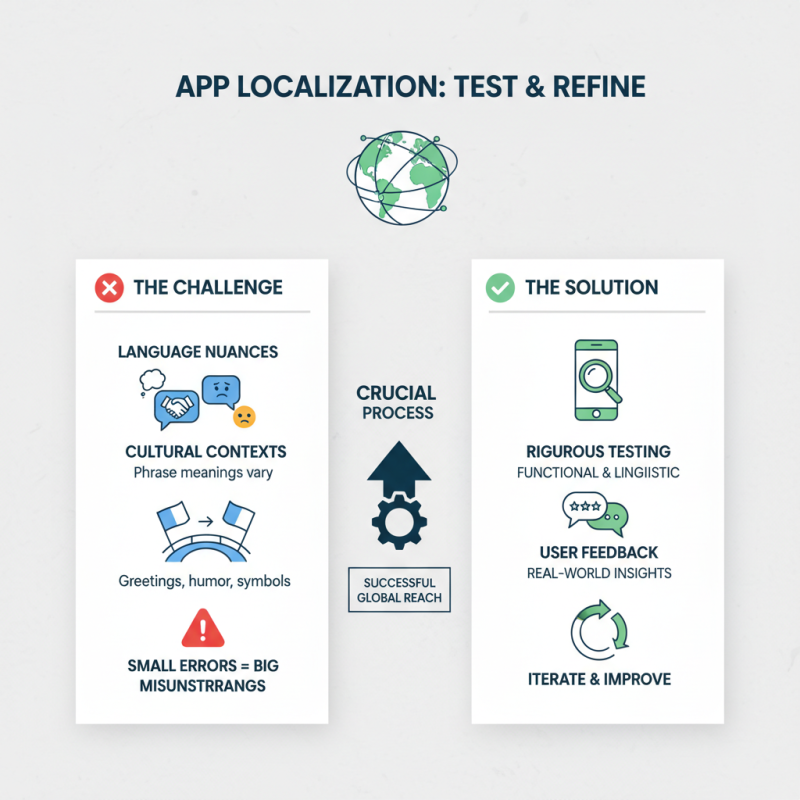
Testing and feedback are crucial in localizing apps for diverse markets. Without proper testing, small errors can lead to major misunderstandings. Consider language nuances and cultural contexts. A simple phrase can have various meanings. For example, a greeting that works in one region may not resonate in another.
Engaging local users during the testing phase is vital. Collecting their feedback provides insights that experts might miss. Local testers can highlight cultural references that may seem odd to outsiders. User experience should feel natural and intuitive. If localization feels forced, users may abandon the app.
Analyzing feedback helps refine localized versions. Conduct surveys or focus groups. However, interpreting user comments can be challenging. Some suggestions may clash with your vision. It's essential to remain open-minded and flexible. Embrace the imperfections in the process. Each iteration improves quality and addresses local needs better.