What Are Colored Thermal Labels and How Do They Work?
Colored Thermal Labels are changing how brands communicate information at the point of handling. Unlike ordinary monochrome labels, they can combine thermal printing with colored materials, pre-printed zones, or process-controlled color markers. A red strip may signal urgency. A blue field can separate product categories. The label becomes more than a barcode carrier.
The basic mechanism is surprisingly practical. A thermal printhead applies controlled heat to a coated surface. Direct thermal media darkens when heated, while thermal transfer media receives ink from a ribbon. Most color effects come from colored label stock, pre-printed designs, specialty coatings, or carefully engineered thermal layers. Full-color thermal output is possible, but it requires compatible media and equipment. It is not always simple.
Industry research supports the technology’s growing relevance. Smithers’ report, The Future of Thermal Printing to 2028, highlights continued demand for reliable variable-data printing across logistics, retail, healthcare, and manufacturing. Grand View Research also describes thermal printing as a durable market, supported by barcode identification and automated operations. These findings match practical warehouse experience: a label must survive scanning, movement, moisture, and repeated handling.
GS1 standards emphasize accurate, machine-readable identification, which makes print contrast and barcode quality essential. A visually attractive label still fails if scanners cannot read it. Colored Thermal Labels therefore require testing under real conditions, including different scanners, lighting, surfaces, and storage temperatures. Thermal sensitivity can also change over time. This point is often overlooked.
The technology offers speed and flexibility. Yet it is not a perfect answer for every application. Material selection, printhead calibration, ribbon compatibility, and color consistency deserve careful review. Understanding these details explains how Colored Thermal Labels work and where they create measurable operational value.
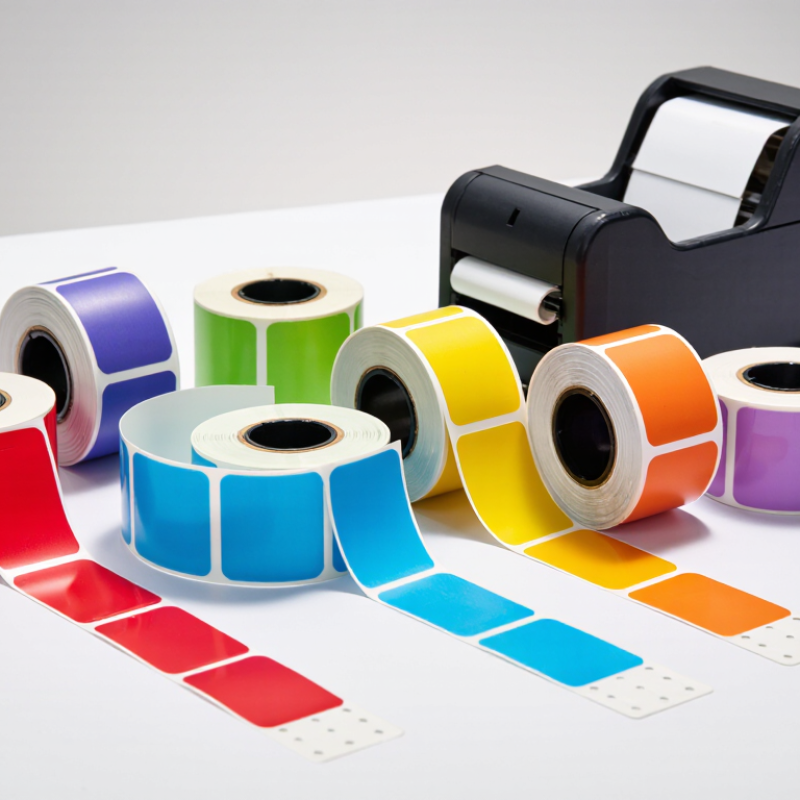
What Are Colored Thermal Labels?
Colored thermal labels are labels designed to show color while using heat-based printing technology. The color may come from the label material, a thermal transfer ribbon, or a heat-sensitive coating. This distinction matters. A colored label does not always produce full-color images.
Direct thermal labels react when heated by a printer’s printhead. The heated dots darken selected areas, while the label background may already be red, blue, yellow, or another shade. These labels are simple and do not need ink or a ribbon. However, sunlight, friction, and high temperatures can gradually fade the printed image. They suit short-term identification, price marking, and internal storage tasks.
Thermal transfer labels work differently. Heat moves colored pigment from a ribbon onto the label surface. The result is usually sharper and more durable. It can support colored text, symbols, or strong contrast on plastic and coated materials. Printer settings still matter. Excessive heat may blur small characters or damage the surface.
A practical test should use the real printer, ribbon, and label stock. Check barcode scanning, edge sharpness, adhesive grip, and storage conditions. A bright sample can look dull under warehouse lighting. The category is less tidy than its name suggests. Some materials need special calibration, and a perfect first print is not guaranteed.
How Do Colored Thermal Labels Create Images?
Colored thermal labels form images through controlled heat, not liquid ink. A thermal printhead contains many tiny heating elements arranged in a line. As the label moves, selected elements pulse against its surface. Each pulse changes a heat-sensitive coating. The pattern appears dot by dot. Good alignment matters.
Some labels use several color-forming layers. Different heat levels or exposure times activate different chemicals. One pass may create dark marks, while another produces colored areas. Other systems use separate color sections that respond in sequence. The printer controls energy through temperature, speed, and pressure. Too little heat leaves pale gaps. Too much heat can blur edges or trigger the wrong layer.
In practical testing, clean rollers and accurate settings make a visible difference. Dust can interrupt individual dots, creating broken text or uneven blocks. Labels also react to storage conditions. Bright light, moisture, and high temperatures may fade certain images over time. That weakness deserves attention. A color result is not automatically a permanent result. I would check samples under real handling conditions before choosing a material. A small test can reveal banding, weak contrast, or unexpected color shifts.
What Materials and Technologies Are Used?
Colored thermal labels combine a printable face material, heat-sensitive chemistry, adhesive, and release liner. The face may be white, tinted, or fully colored before printing. Paper is economical and provides a soft, natural texture. Synthetic films offer better resistance to moisture, abrasion, and chilled storage. The adhesive must match the surface, too. Cardboard, glass, and rough plastic each need different bonding behavior. A label can look excellent yet peel within hours.
Two main technologies create the printed image. Direct thermal labels use a heat-sensitive coating that darkens when heated by the printhead. Some specialty coatings can produce two colors at different temperatures, but precise calibration is essential. Thermal transfer printing uses a heated ribbon to deposit wax, resin, or a blended ink onto the label surface. This method generally produces stronger color stability and sharper small text. Ribbon chemistry matters. A ribbon designed for paper may perform poorly on film.
Production teams should test darkness, edge definition, adhesive strength, and fading under real storage conditions. Check the first and last labels from a roll. Heat, pressure, and print speed can change the result. Human judgment still matters. The color may appear accurate on screen but shift under warehouse lighting. Direct thermal coatings can also darken after prolonged heat exposure. That weakness is easy to overlook. Small trials, controlled samples, and documented settings make the material choice more reliable.
Where Are Colored Thermal Labels Commonly Applied?
Colored thermal labels are used where quick visual recognition matters. They combine printed information with a colored background or colored marking. Heat from a compatible printer creates text, numbers, or symbols on the label surface. Some labels use heat-sensitive material, while others require a transfer ribbon for stronger durability.
Retail teams apply them to shelves, cartons, and price-changing products. A red label may indicate a clearance item, while another color can identify a handling area. In warehouses, colored labels help workers separate incoming goods, inspected cartons, and urgent shipments. The color can be noticed before the barcode is scanned. That saves time.
Healthcare facilities use them on specimen containers, medicine storage bins, and equipment trays, subject to their internal procedures. Food operations may place them on prepared containers to show production dates, storage zones, or allergen checks. Manufacturers also use colored labels for work-in-progress parts and quality-control stages. A bright mark is useful beside a busy production line.
Practical testing is important. Strong lighting, moisture, friction, and heat can reduce contrast or cause fading. Labels should be tested on the actual surface, not only on a sample sheet. Color alone may confuse workers with color-vision limitations, so clear words, symbols, or barcodes should support it. This is an area where planning is often imperfect. A color that looks clear in an office may be difficult to recognize inside a warehouse.
What Are Their Benefits and Limitations?
Colored thermal labels usually combine pre-printed color with heat-sensitive text or symbols. A printer then adds variable information, such as prices, batch codes, or expiry dates. In practice, this method is faster than changing full-color artwork for every label. It also reduces ink inventory and simplifies short production runs.
The benefits are practical. Color can separate shipping priorities, product categories, or handling warnings at a glance. Thermal printing also produces sharp small text with little mechanical complexity. Fortune Business Insights estimates the global thermal printing market could grow from about US$15.9 billion in 2023 to US$24.4 billion by 2032. That growth reflects steady demand for quick, on-demand identification. However, market size does not prove every color label application will succeed.
Limitations deserve equal attention. Direct thermal surfaces can darken under heat, sunlight, friction, or prolonged storage. Colored areas may also reduce contrast, especially when black text is printed over dark backgrounds. Smithers’ thermal printing industry analysis identifies durability and sustainability as continuing technical concerns. Thermal-transfer options improve resistance, but they require ribbons and tighter process control. I have seen labels look excellent on day one, then fade near warm loading bays. That was avoidable. Testing should include actual storage temperatures, abrasion, moisture, and scanning distance. A small trial is wiser than trusting a showroom sample. 马会
.svg)


.svg)

.svg)


 052925 - AI Translation 101 (1).png)


.svg)

.svg)


.jpg)