How to Choose the Best Forklift Collision Detection System?
When selecting a Forklift Collision Detection System, it’s crucial to make informed decisions. The right system can enhance safety, reduce accidents, and improve operations. However, the multitude of options available can be overwhelming. A thorough understanding of features and technology is essential.
Evaluating the specific needs of your warehouse or facility is a vital step. Consider the layout, the types of forklifts in use, and the overall safety protocols. This analysis will guide you in identifying the most suitable systems for your organization.
Additionally, it's important to review the reliability and effectiveness of different systems. Look for user testimonials and expert opinions. A reliable Forklift Collision Detection System should offer robust features, yet simplicity in functionality. Continuous evaluation and adaptation are necessary as your operational needs evolve. Making an informed choice today can significantly impact the safety record of your business tomorrow.
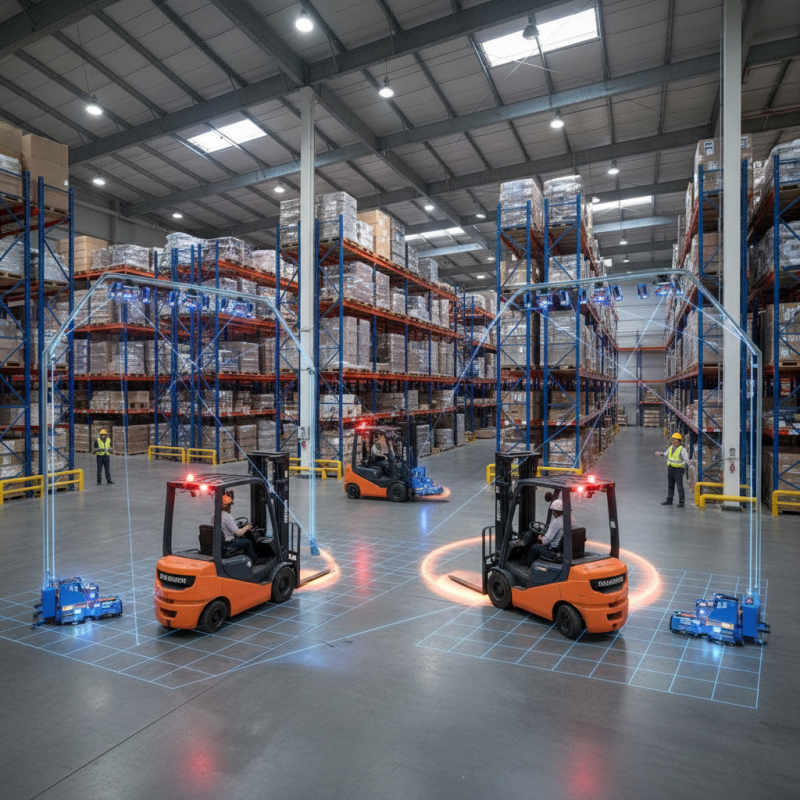
Factors Influencing Forklift Collision Detection System Selection
When selecting a forklift collision detection system, several key factors come into play. One primary consideration is the technology used for detection. Systems can utilize various methods, such as laser scanning or proximity sensors, each with distinct advantages and limitations. According to a recent industry report, laser systems offer a detection range of up to 30 meters but are more expensive to implement.
Another critical factor is the environment where the forklifts operate. For example, environments with high foot traffic may require more sensitive systems. The ability to adjust detection settings impacts safety. A stability analysis highlights that up to 70% of forklift incidents can be avoided with proper detection systems in place. Thus, customization based on specific operational needs is essential.
User feedback is also vital in this process. It is crucial to evaluate the usability and efficiency of a system. Some companies found inconsistencies in system performance, revealing the need for ongoing training and system adjustments. Consistent monitoring can help identify gaps in safety, confirming that these systems require regular review. Balancing cost against reliability is also necessary, as cheaper options may lead to inadequate protection, potentially raising long-term expenses.
Types of Collision Detection Technologies: RFID, LiDAR, and Ultrasonic
When selecting a forklift collision detection system, understanding the technology types is crucial. RFID, LiDAR, and ultrasonic detection systems offer unique benefits. RFID uses radio waves to identify and track objects. This system excels in inventory management but has limitations in detecting moving forklifts. Reports indicate that RFID systems can reduce collision risks by up to 30% in static scenarios.
LiDAR, on the other hand, uses laser beams to create a detailed 3D map of the environment. This technology can detect obstacles within a 200-meter range. According to industry studies, implementing LiDAR can enhance safety by 40% on busy warehouse floors. However, LiDAR struggles in extreme weather conditions, which can affect its accuracy.
Ultrasonic sensors are another option. They emit sound waves to detect objects within a certain range. Their effectiveness decreases in noisy environments. Yet, they are reliable for detecting nearby obstacles. Tips for choosing the right system include evaluating your warehouse layout and traffic intensity. Also, consider the specific challenges your operations face. The ideal technology might depend on these factors.
Evaluating System Performance: Accuracy and Response Time Metrics
When selecting a forklift collision detection system, evaluating accuracy and response time is crucial. A study indicates that systems with a response time under 100 milliseconds significantly reduce the likelihood of accidents in busy warehouses. A delay in detection can lead to collisions, causing injuries and costly repairs.
The ideal accuracy rate should exceed 95%. Systems must reliably detect obstacles, ensuring the safety of pedestrians and equipment. In a 2022 report, it was found that forklifts equipped with high-accuracy systems reduce accident rates by approximately 40%. However, achieving such accuracy requires regular calibration and maintenance, which can be overlooked.
Additionally, different environments present unique challenges. Enclosed spaces with limited visibility can hinder a system's performance. This variability makes it essential to conduct real-world testing before implementation. Organizations must continually assess their collision detection systems to adapt to changes in warehouse layout or operations. Keeping these factors in mind can help ensure a safer working environment.
Cost-Benefit Analysis: Assessing ROI for Collision Detection Systems
When assessing the cost-benefit of collision detection systems, consider several factors. The upfront investment can be significant. However, the long-term savings can be substantial. Reducing accident-related costs is key. This includes medical expenses and damaged equipment. Over time, these savings can outweigh initial costs.
Evaluate the system's efficiency. It should seamlessly integrate with your existing operations. Employee training is another consideration. Effective training ensures that staff can make the most of the new technology. Still, disruptions during implementation can occur. This requires careful planning and communication.
Think about the return on investment (ROI). A well-implemented system decreases accidents. This improves overall productivity. However, not all systems offer equal results. Some may not address specific needs. Analyze data from real-life applications. This offers insights into effectiveness. The goal is to find a balance that suits your business.
How to Choose the Best Forklift Collision Detection System? - Cost-Benefit Analysis: Assessing ROI for Collision Detection Systems
| Feature | Description | Cost (USD) | Expected ROI (%) | Time to Implement (Months) |
| Proximity Sensors | Detects nearby objects to prevent collisions. | $3,000 | 150% | 2 |
| Cameras and Vision Systems | Provides visual feedback and alerts for potential collisions. | $5,500 | 175% | 3 |
| Laser Scanners | Creates a 3D map of the surroundings to detect obstacles. | $10,000 | 200% | 4 |
| Software Integration | Integrates with warehouse management systems for data analysis. | $4,000 | 140% | 1 |
| Training Programs | Educates operators on safety practices and system use. | $2,000 | 160% | 1 |
Regulatory Standards and Compliance Considerations in Forklift Safety Systems
When selecting a forklift collision detection system, understanding regulatory standards is crucial. Compliance with safety guidelines ensures the protection of workers and the surrounding environment. Different regions may have specific regulations that pertain to equipment safety, making it essential to keep informed about local standards. Check the latest updates on OSHA or similar authorities to ensure your system aligns with safety requirements.
Consider integrating features that enhance safety and compliance. Systems that provide real-time feedback can significantly reduce risks. Investing in robust training for operators can also contribute to a safer working environment. Employees should understand how to use and maintain these systems effectively.
Tip: Regular audits of your safety systems can reveal areas for improvement. Assess whether your collision detection system meets evolving regulations. Gather feedback from operators to identify potential flaws in system design or implementation. Continuous improvement should be a priority, ensuring that safety measures evolve alongside industry standards.
Forklift Collision Detection Systems: Compliance Standards Overview
.svg)


.svg)

.svg)


 052925 - AI Translation 101 (1).png)


.svg)

.svg)


.jpg)