.svg)


.svg)

.svg)


 052925 - AI Translation 101 (1).png)


.svg)

.svg)


.jpg)
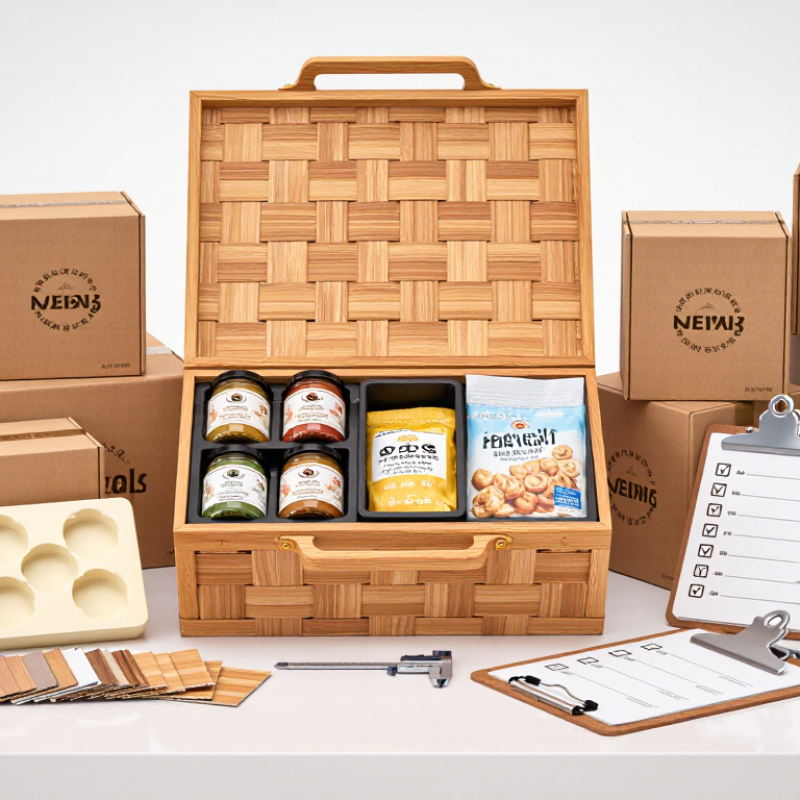
When global buyers compare hamper gift box suppliers, appearance is only the starting point. In supplier audits, I examine material quality, packing accuracy, and production records. A reliable supplier should provide clear product specifications, including box dimensions, fabric weight, food-contact details, and shelf-life information. Sample boxes reveal more than polished photographs. Check the corners, ribbon tension, inner padding, and printed colors under natural light. Small flaws often become expensive at scale.
International delivery requires stronger evidence. Ask for export experience, destination coverage, carton measurements, and realistic shipping timelines. The supplier should explain customs documents, labeling rules, and temperature-sensitive handling when relevant. Confirm minimum order quantities and whether mixed designs are possible. Flexible customization helps, but vague promises create risk. Request a written quotation with tooling fees, replacement terms, payment stages, and delivery conditions.
Communication matters.
A dependable team answers technical questions directly and reports delays early. Evaluate response times across several weeks, not during one sales conversation. Request a small trial order before committing to a seasonal campaign. Inspect random cartons after arrival, because one perfect sample proves little. I have seen attractive hampers arrive with crushed corners and uneven inserts. That experience changed my checklist. Supplier references can help, but they should not replace independent inspection. A mature supplier also admits capacity limits, production mistakes, and weak areas instead of claiming perfection.