How to Become a Professional Language Translator in 2026?
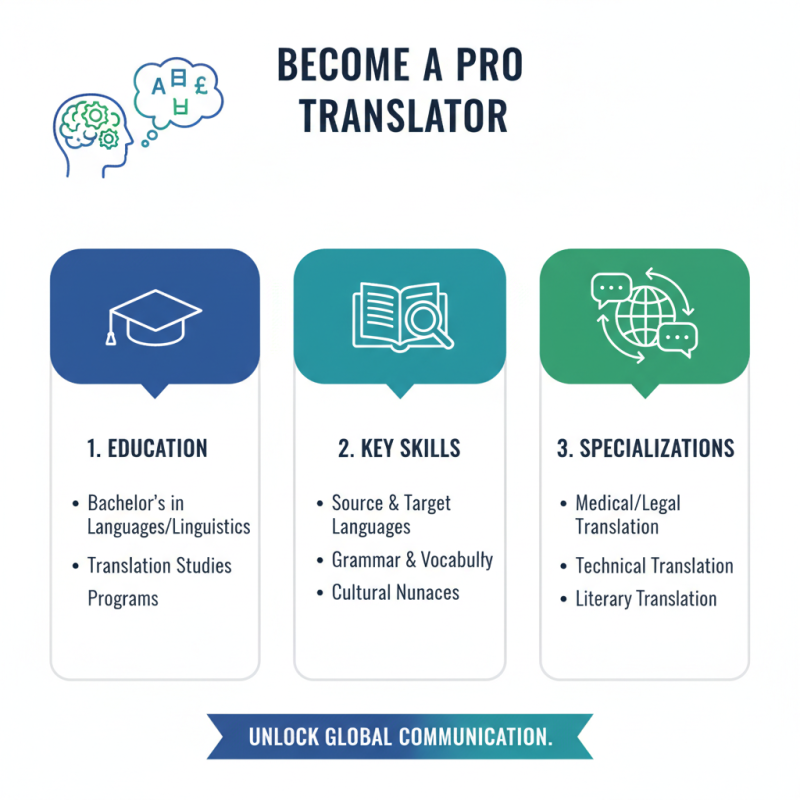
Becoming a professional language translator by 2026 is an exciting journey. The demand for skilled translators is rising. Businesses and individuals seek clear communication across borders. To meet this need, aspiring translators must develop specific skills and insights.
Language proficiency is critical. Yet, it’s not just about speaking well. Understanding cultural nuances is essential. A professional language translator must adapt to different contexts. This includes slang, idioms, and tone. Misinterpretation can lead to misunderstandings. Attention to detail is vital in this field.
Training often requires formal education and practice. Online courses are valuable resources. However, they are not a one-size-fits-all solution. Networking is equally important. Connecting with industry professionals opens doors. Reflecting on feedback can help refine skills and grow in this competitive landscape.
Understanding the Role of a Professional Language Translator in 2026
In 2026, the role of a professional language translator is evolving rapidly. A translator must now blend linguistic skills with technology. Machine translation tools are widely used, but human insight remains vital. Understanding cultural nuances is crucial for context. A translator who ignores this may produce awkward or misleading translations.
Today's translators also need strong research skills. Clients demand accuracy in every detail. Mistakes can lead to misunderstandings or lost business. They may work in legal, medical, or technical fields, where terms are specific and complex. Each area has its challenges. A single error may have significant consequences. This reality demands ongoing education and self-reflection.
Furthermore, networking is essential in the translation industry. Building relationships can lead to new opportunities. Collaborating with peers may enhance your skills. However, some may struggle with finding their place. It can be daunting in such a competitive environment. Continuous improvement and adaptability are key traits for success in this dynamic career path.
Essential Language Skills and Competencies for Translation Professionals
In 2026, becoming a professional language translator demands a unique set of skills. According to the Bureau of Labor Statistics, the demand for translators is expected to grow by 20% from 2021 to 2031. This growth is driven by globalization and the need for clear communication across cultures. Essential language skills include not only fluency in multiple languages but also an understanding of idiomatic expressions and cultural nuances.
Competencies extend beyond language proficiency. Professionals must possess strong research skills. Translators often encounter specialized terminology that requires deep knowledge of specific fields. A recent report from the ATA highlighted that 56% of translators engage in continuous learning to keep abreast of industry changes. Engaging with current events and cultural trends is crucial. However, many translators struggle with maintaining relevance in rapidly changing linguistic environments.
Emotional intelligence plays a significant role as well. A translator must empathize with the text's tone and the author’s intent. This adds another layer of complexity. Nevertheless, many professionals overlook this aspect, focusing purely on literal translations. The art of translation deserves attention and refinement, requiring more than just language skills. With diligence and reflection, aspiring translators can work towards mastering these essential competencies.
How to Become a Professional Language Translator in 2026? - Essential Language Skills and Competencies for Translation Professionals
| Skill/Competency |
Description |
Importance Level (1-5) |
Future Demand |
| Bilingual Proficiency |
Fluency in at least two languages, one being the source and another the target language. |
5 |
High |
| Cultural Competence |
Understanding cultural nuances and context to provide accurate translations. |
4 |
Medium |
| Specialization |
Expertise in specific fields such as legal, medical, or technical translation. |
5 |
High |
| Writing Skills |
Ability to write clearly and effectively in the target language, maintaining the source text's meaning. |
4 |
High |
| Technology Proficiency |
Familiarity with translation software and tools to improve efficiency. |
3 |
Medium |
Building a Successful Career: Networking and Industry Opportunities
Networking is crucial for any aspiring language translator. Building connections can lead to job opportunities and collaborations. Attend local industry events and conferences. Meet fellow translators, editors, and potential clients. Engaging in conversations can help you understand industry needs. It's not just about exchanging business cards. Genuine relationships can foster long-term partnerships.
Online platforms also play a vital role. Join professional groups on social media or forums. Share your work and participate in discussions. However, remember to provide value to others. Simply promoting yourself can be off-putting. Instead, offer insights or advice based on your experiences. Reflect on your interactions. Are you just networking, or are you making meaningful connections?
Consider mentorship as a valuable opportunity. Finding a mentor can guide you through the complexities of the industry. Their insights can save you from common pitfalls. Yet, not all mentors resonate. It's important to choose someone who aligns with your values and goals. This relationship should feel collaborative, not one-sided.
Staying Current: Technology and Trends Impacting Translation Services
The translation industry is rapidly changing due to technology. In 2026, translators will rely heavily on tools like AI and machine learning. These innovations can speed up the translation process significantly. However, this reliance brings challenges. The nuances of language often get lost in automated translations.
Staying updated is crucial. Translators must adapt to new software and applications. Joining online forums can help professionals share insights and experiences. It's important to keep learning. Traditional skills, like cultural understanding, remain essential. Yet, technology can overshadow them at times.
Additionally, networking will matter more than ever. Collaborating with other linguists can offer fresh perspectives. Attending workshops can also sharpen skills. The balance between human intuition and machine efficiency is tricky. Translators must navigate this evolving landscape thoughtfully.
.svg)


.svg)

.svg)


 052925 - AI Translation 101 (1).png)


.svg)

.svg)


.jpg)