How to Use AI Language Translation to Improve Communication Skills?
In today’s globalized world, effective communication is vital. AI language translation is revolutionizing how we connect with others. According to a recent report by the Language Industry Association, the market for AI-driven translation services is expected to reach $3 billion by 2025. This growth highlights the increasing reliance on technology for cross-cultural communication.
Experts emphasize the importance of AI language translation in enhancing communication skills. Dr. Emily Tran, a prominent linguistics specialist, states, “AI language translation not only bridges language barriers but also enriches the way we engage with different cultures.” This insight sheds light on the powerful role AI can play in fostering understanding among diverse populations.
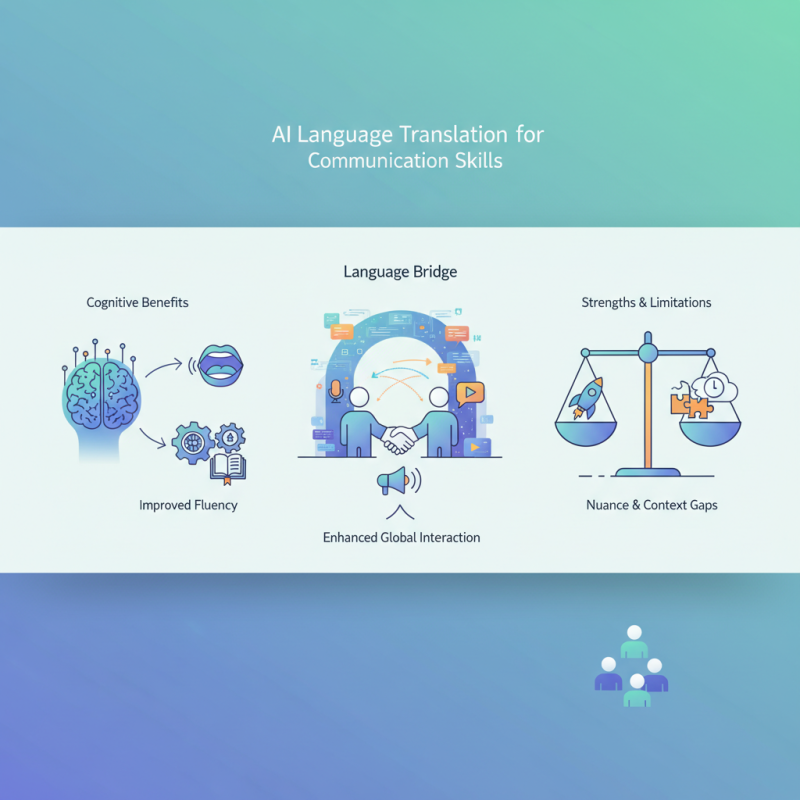
However, it is crucial to acknowledge the limitations of AI translation. It may lack the nuances of human expression and cultural context. While AI translation tools can provide quick solutions, users often face challenges with meaning and tone. Reflecting on these shortcomings is essential for effectively improving communication through technology. Embracing both the strengths and weaknesses of AI language translation can lead to more meaningful interactions.
Understanding AI Language Translation and Its Benefits for Communication
AI language translation has transformed communication in many ways. This technology breaks down language barriers. It helps facilitate meaningful conversations across different cultures. With AI, we can speak with people who speak a different language, making our world smaller.
Using AI tools can enhance our speaking and writing skills. As we practice, we become more aware of nuances and grammar. This awareness can strengthen our proficiency in both our native and target languages. However, relying solely on AI may also lead to issues. Automated translations can sometimes be inaccurate. Misinterpretations can occur, affecting the intended message.
Engaging actively with AI translation tools can yield better results. Use them to explore diverse expressions and phrases. This interaction allows us to refine our communication styles. Yet, the challenge lies in understanding when these translations fall short. Reflecting on our conversations can reveal areas of improvement.
Constant practice with AI can lead to better communication skills and increased confidence.
Types of AI Language Translation Tools Available Today
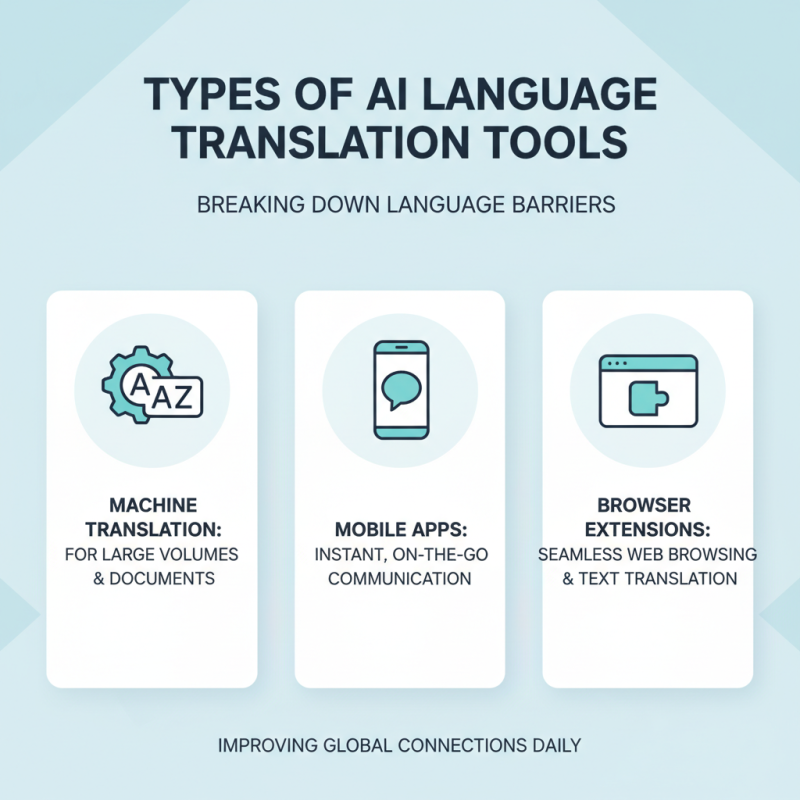
AI language translation tools are transforming communication. These tools can break down language barriers and improve interpersonal connections. Various types of translation tools are available today. They include machine translation, mobile applications, and browser extensions. Each serves a distinct purpose and caters to different needs.
Machine translation systems use algorithms to convert text from one language to another. This can be beneficial for translating documents. However, they sometimes miss context. Mobile applications allow users to translate on the go. They can be handy while traveling. Yet, offline capabilities may not be perfect.
Browser extensions simplify translation while browsing the web. You can click a button and get instant translations. This is useful for learning and enhancing skills. Here are some tips: Always double-check translations for accuracy. Be aware that idioms and slang may not translate well. Practice using these tools regularly to gain confidence. While these tools are helpful, note that they are not flawless. Mistakes can occur, and users must remain critical of results.
Strategies for Integrating AI Translation Tools into Language Learning
Integrating AI translation tools into language learning can significantly enhance communication skills. These tools can provide instant translations, making it easier for learners to grasp new vocabulary and sentence structures. For example, when practicing speaking or writing, students can use AI to check their grammar. This instant feedback can help identify errors that they might not notice otherwise.
Another strategy involves using these tools for immersive learning. By engaging with authentic materials—like videos or articles—learners can input foreign phrases and get translations. This method helps in understanding context and nuances, enriching their grasp of the language. However, learners should be cautious. Over-reliance on AI may restrict their ability to think critically in the target language. The goal should be to use these tools as a supplement, not a crutch.
Incorporating AI tools into conversations can also be beneficial. Practice real-life dialogues using translation applications. This could be a fun and interactive way to build confidence. Yet, students often face challenges. Language nuances and cultural references might get lost in translation. Reflecting on these moments can lead to deeper learning and growth in communication skills. A balance between technology and traditional methods is essential for effective language acquisition.
Enhancing Communication Skills Through Practice with AI Translations
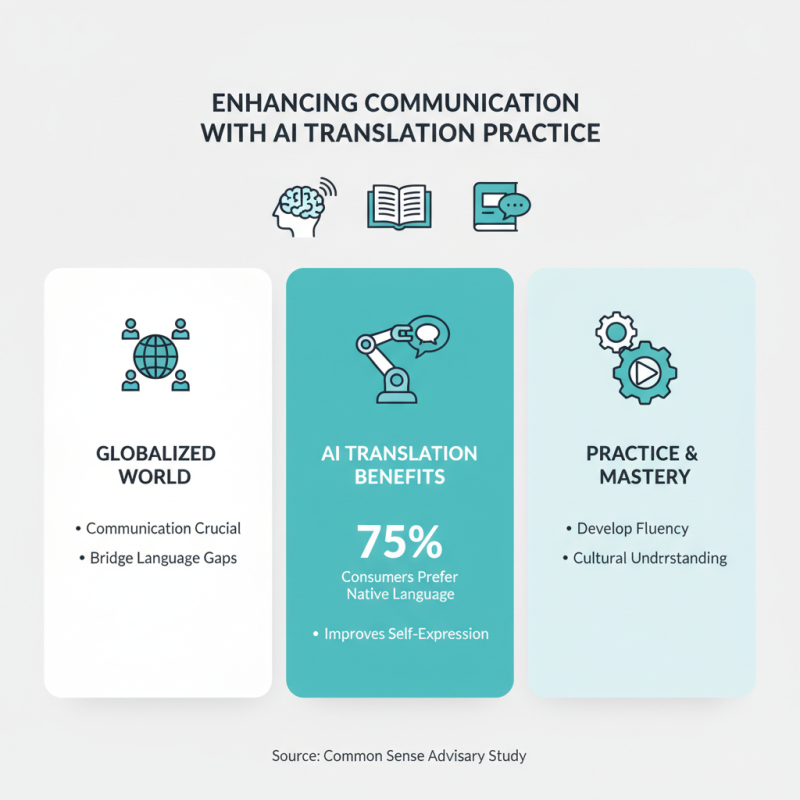
In today's globalized world, communication skills are more crucial than ever. Using AI translations can enhance these skills significantly. Many individuals find it challenging to express themselves in different languages. A study by the Common Sense Advisory found that 75% of consumers prefer content in their native language. Hence, practice with AI translations can bridge this gap.
Practicing with AI translations provides immediate feedback. While the translations might not always be perfect, they offer a chance to see where improvements can be made. Users can compare their original text with translated versions. This comparison highlights errors in grammar and word choice. By reflecting on these discrepancies, one can gradually enhance language skills.
Moreover, AI translation tools can simulate real conversations. They can help users test their skills in different contexts. However, relying solely on AI can lead to complacency. It’s crucial to engage with native speakers. This real-world practice complements AI, ensuring thorough language proficiency. Overall, AI translations facilitate necessary practice, yet human interaction remains essential for effective communication.
Evaluating the Effectiveness of AI Language Translation in Real-Life Scenarios
AI language translation tools have transformed communication across cultures. However, their effectiveness in real-life scenarios warrants attention. Research shows that around 70% of users report improved understanding in conversations. Yet, 30% still struggle with nuances and cultural context. While technology enhances communication, it doesn’t replace the need for human interaction.
Tips: Focus on context. Pay attention to idioms and expressions in the source language. Not all phrases translate smoothly. Misinterpretations can arise with colloquial language. Consider engaging native speakers when in doubt.
Moreover, AI tools often lack emotional depth. They might convey words but miss the sentiment behind them. A recent study indicated that 40% of users found translations emotionally flat. In scenarios where empathy is crucial, human translators excel. Reflecting on these limitations helps improve our approach to AI tools in communication.
Tips: Don’t rely solely on AI for important conversations. Practice your skills alongside these tools. This dual approach could boost your confidence and effectiveness in diverse interactions. Embrace both technology and human touch for the best results.
How to Use AI Language Translation to Improve Communication Skills? - Evaluating the Effectiveness of AI Language Translation in Real-Life Scenarios
| Scenario |
Language Pair |
AI Tool Used |
Effectiveness Rating (1-10) |
User Experience |
| Business Meeting |
English - Spanish |
AI Translator A |
9 |
Highly effective in real-time communication. |
| Customer Support |
French - English |
AI Translator B |
8 |
Good but occasionally misses nuances. |
| Travel Communication |
Japanese - English |
AI Translator C |
7 |
Useful for basic conversations; lacks context. |
| Academic Exchange |
German - English |
AI Translator D |
9 |
Excellent for formal and technical language. |
| Social Networking |
Italian - English |
AI Translator E |
6 |
Good for casual conversations but lacks depth. |
.svg)


.svg)

.svg)


 052925 - AI Translation 101 (1).png)


.svg)

.svg)


.jpg)